Sighting humpback whales from Panama City
Spotting them is easy, and it’s an incredible experience.
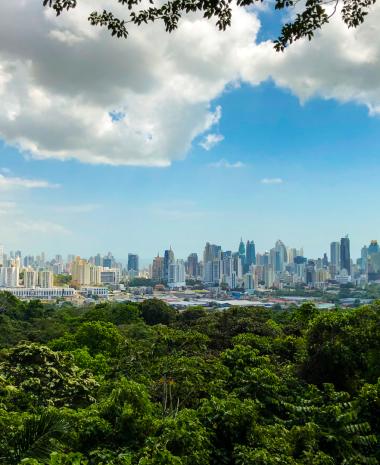
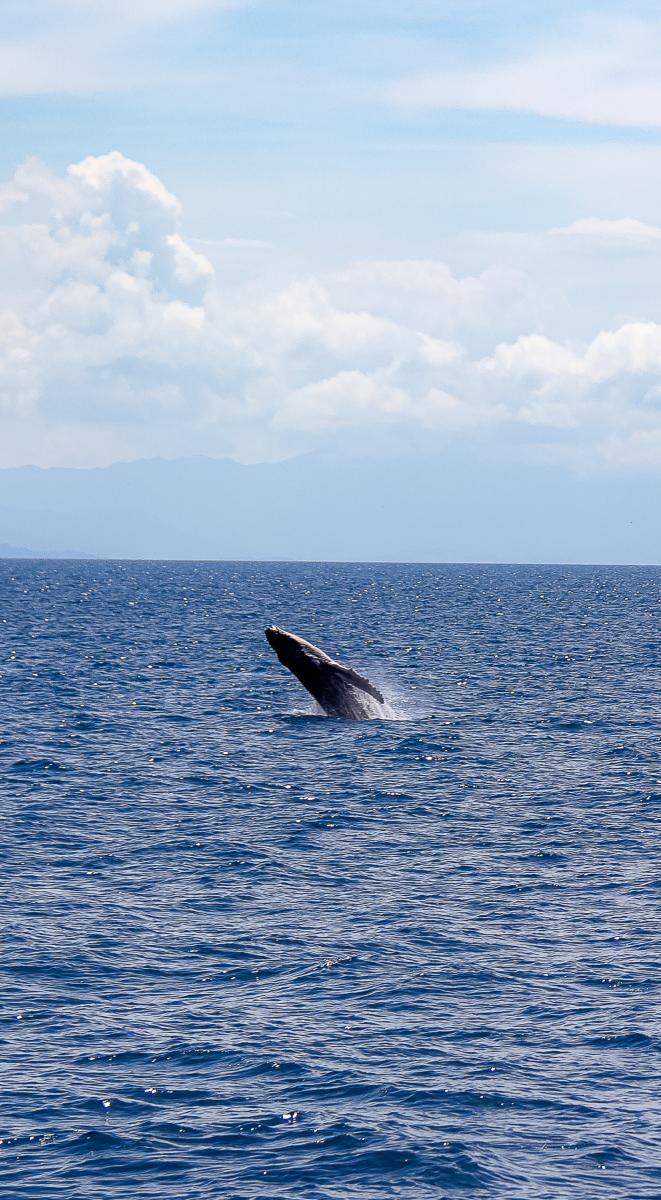
Between July and October, the waters of the Pacific coast of Panamá are full of activity as the humpback whales arrive. These giants migrate thousands of miles to breed, give birth, and care for their calves … right in front of Panama City.
The best part is you can see them without having to travel far.

What makes this experience unique?
-
Whales from both hemispheres
Panamá is one of just a few places in the world where humpback whales from the north and south come together. Come see for yourself how our coasts are a paradise for those who visit. . -
Whale-watching near the city
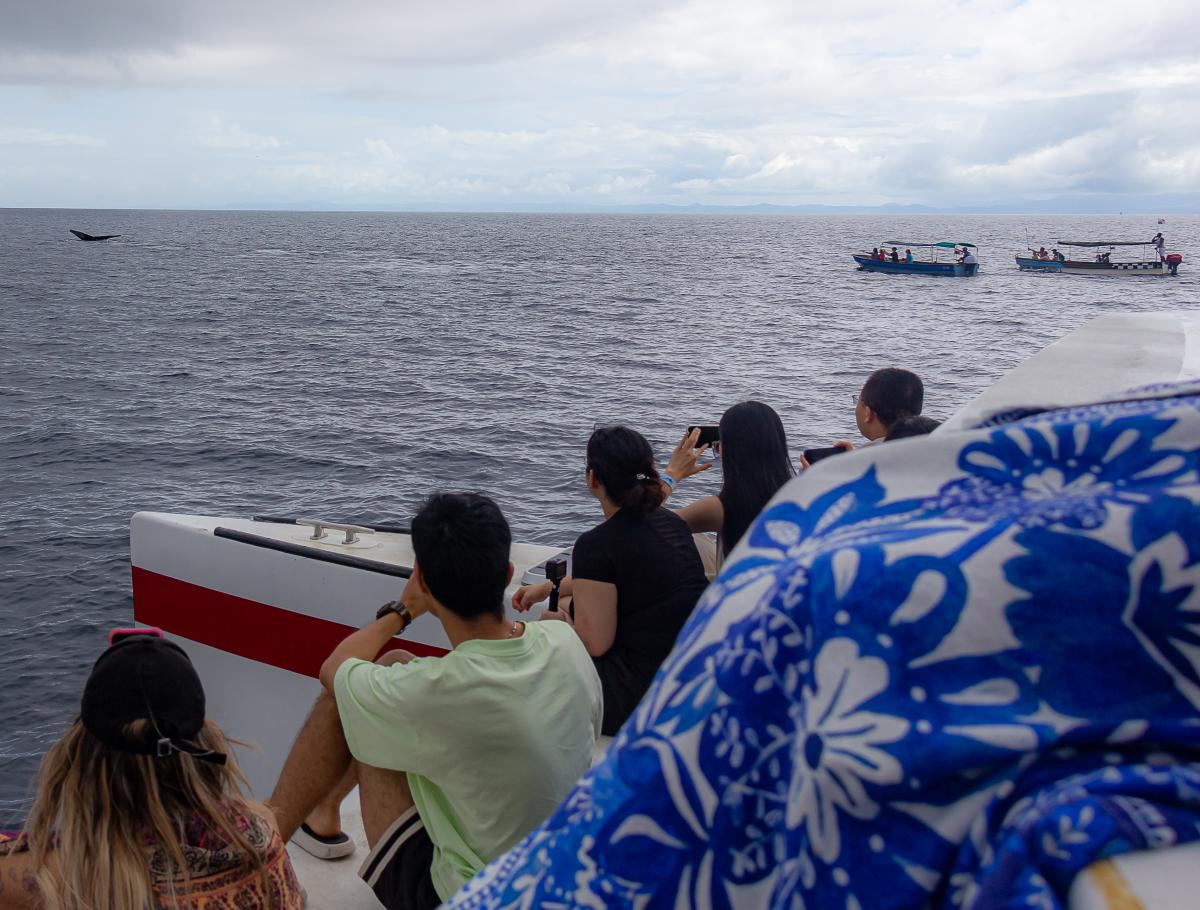
From the Amador Causeway, you can take a boat or ferry to see whales on your trip to Taboga or the Las Perlas Archipelago. You don’t need to fly to another destination or go on a long trip. -
Mating rituals, calves, and more
The whales don’t just migrate through here—they stay for a while. They breed, give birth, nurse, and teach their calves to swim. You could witness special moments, such as courtship rituals or mothers teaching their calves to breach later on. -
Calm settings away from the crowds
Las Perlas Archipelago offers clear waters, tranquil islands, and an uncrowded place to whale-watch. Plus, local communities participate actively in ecotourism. Sail between the islands and scan the horizon to spot humpbacks in the wild, in their natural habitat.
From Panama City, take a ferry from Isla Flamenco, on the Amador Causeway, to Las Perlas Archipelago or from the JW Marriott in Punta Pacifica.
Sail to and between the islands in Panama Bay, and you’ll have several opportunities for whale sightings.
You can also travel to Isla Contadora (by ferry or plane) and go on a private tour from there. Take a boat with local guides who know the whales’ routes and behaviors and search for the giants.
Responsible whale-watching
In Panamá, whale-watching is a regulated activity to protect over 30 species of cetacean and the immense amount of marine life we have. Various scientific and government bodies have established rules so we can see the humpbacks in a way that is safe for them and for visitors.
Keep in mind that official operators must follow rules including the following:
-
Maintain at least 250 meters of distance.
-
Do not make noise or interfere in any way.
-
Do not feed the whales or throw anything into the water.
-
Do not watch the same group of whales for more than 30 minutes. If there are calves in the group, the maximum time allowed is 15 minutes.
-
Do not get too close. Swimming, diving, or rowing near the whales is prohibited.
Remember that if you want to whale-watch in the wild, you should protect them too.

Tips for
Whale-Watching
The humpback whale season is from July to October. August is the busiest month with the best chance of a sighting.
When you go out looking for humpbacks, please remember that it is an experience that depends entirely on nature. Many factors may affect your experience: the weather, the number of whales in the area, and their behavior that day. It will all be a surprise for you to discover in the moment, since every outing is different.
Wear lightweight clothing, a hat and biodegradable sunscreen, and bring reusable water bottles. Use a camera with a zoom lens or binoculars.
Learn more
10 Days in Panama City
A modern metropolis located between the lushness of the rainforest and the Pacific...
Watersports & Beaches
Panama City offers exciting watersports and beautiful nearby beaches for those seeking adventures at...
Culture & Arts
Panama City is a vibrant hub of culture and arts, offering countless visitor experiences. Start your...