



Gunas
They live and preserve their traditions between the islands and the sea in the Gunayala Comarca, also known as San Blas. Discover more

They live and preserve their traditions between the islands and the sea in the Gunayala Comarca, also known as San Blas. Discover more

They keep their culture alive in Chagres National Park, where rivers and forests are part of their rich traditions. Discover more

Located in the western part of the country (Chiriqui, Veraguas, and Bocas del Toro), they safeguard their culture among mountains and waterfalls. Discover more

In Bocas del Toro, they protect the rivers and the rainforest within La Amistad International Park, where biodiversity and their culture go hand in hand. Discover more

Now that you know that we’ve got you covered, it’s time to explore Panamá with no worries. Travel from one ocean to another, passing through jungles and over mountains, all while staying protected by Free Tourist Insurance.

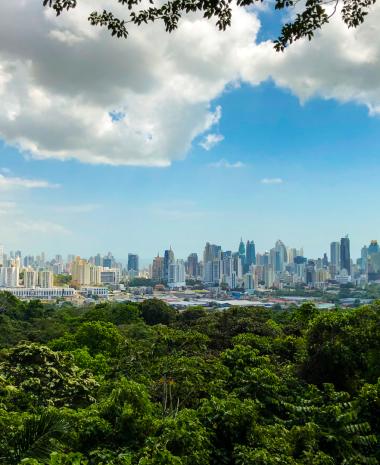
Panama City is much more than the country's capital. Here you can pedal in front of a skyline...

Boquete is a colorful, wooded valley surrounded by the mountains of Chiriquí, in northwestern...

In the province of Veraguas, in central Panamá, the Pacific Coast is an exciting destination...

Portobelo, located on the north side of Panamá, in the province of Colón, faces...

The Tierras Altas region is a quite different place from the rest of Panamá. It is a...

The Riviera Pacifica extends along the Pan-American Highway, a 25 mile (40 km) stretch of road...

The province of Los Santos, located in the south of Panamá, is the cradle of folklore. At the...

Bocas del Toro is one of the favorite destinations among Panamanians and visitors. Just a 45-minute...

El Valle de Anton is a beautiful mountain town nestled in the crater of an extinct volcano. Located...

The Gulf of Chiriquí extends along Panama’s Pacific coast from the Costa Rican border...

Isla Taboga, or the Island of Flowers, is a volcanic island characterized by rich tropical plant...

Arguably the most famous attraction in Panamá is the Panama Canal. As one of the 7 Wonders of...