Guide to Take Home a Souvenir with Soul

If you’re traveling in Panamá, you’ve probably already fallen in love with its warm people, breathtaking scenery, and vibrant culture. And maybe you’re wondering: what should I take home as a souvenir from Panamá?

Choosing the perfect souvenir isn’t something to take lightly. Look for something that tells a story, something with soul, rather than just a simple object. Choose an artisanal piece crafted by Panamanian hands, a unique work that contains the essence of this country and reflects the heart of its people. Best of all, by buying directly from the artisans, not only will you be taking home a unique treasure but you’ll also be supporting the preservation of the country’s traditions.

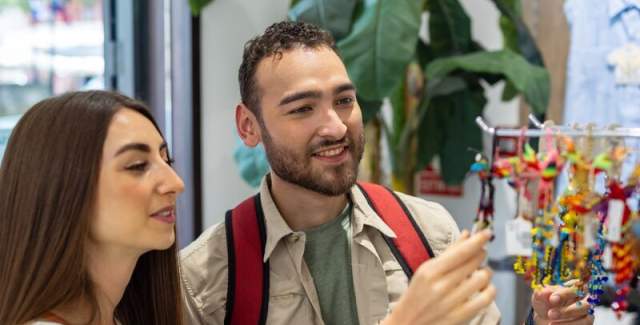
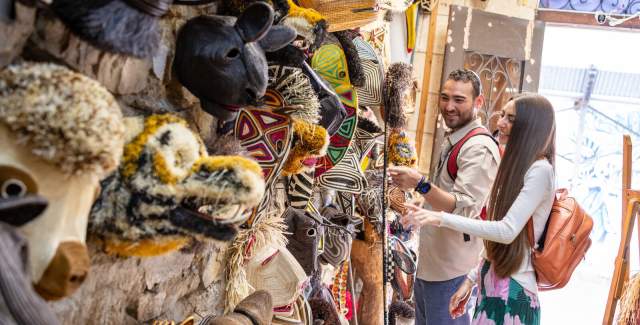
Pareja de compras en el Casco Antiguo en Ciudad de Panamá, Panamá

Why Choose Handicrafts as Souvenirs

If you’re looking for a special, authentic souvenir, handicrafts are the best choice. Although the typical mass-produced souvenirs are a practical option, handmade pieces have incomparable emotional and cultural value. 

Buy handicrafts in Panamá, buy with soul.

Each one tells a story, represents ancestral techniques, and conveys the identity of Panamá.

When you choose a handicraft, you get much more than an object—you get connection, history, and heart.

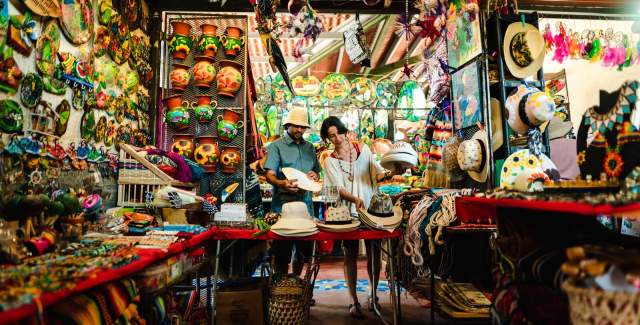
Mercado Artesanalen el Valle de Antón en Coclé, Panamá

What Souvenir to Buy in Panamá

You already know the answer: a handicraft. Now you just have to choose one. 

If you like art made by hand, you’re in luck, because you have a lot of options to choose from. Each community in Panamá has a unique artistic expression, full of history and tradition. Here are some options:

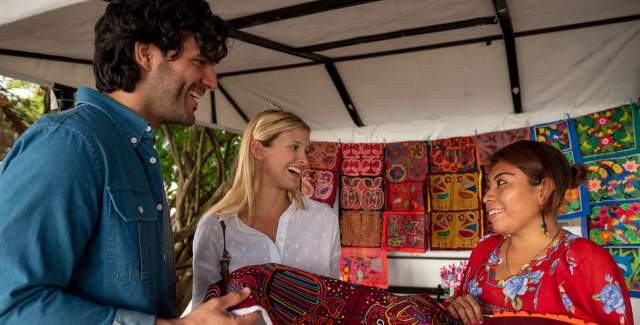
Mujer de la comunidad muestra una Mola tradicional a un par de visitantes.

Handicrafts from Panamá

Molas

What are they?

Molas are complex, colorful textiles handmade by Guna women. This is a thousand-year-old tradition so important that it has its own museum. Visit the Mola Museum, in Casco Viejo, to learn all about this textile art. 

Buy a mola to decorate your home, look for an accessory with decorative molas, or wear one as part of your outfit, just like the Guna women. 

Where to buy

Without a doubt, the best place to buy a mola is on one of the 360 idyllic islands in the Gunayala region. On the islands, you can support the Guna people and buy all kinds of molas. You can also find them at crafts fairs and in tourist areas in Panama City.

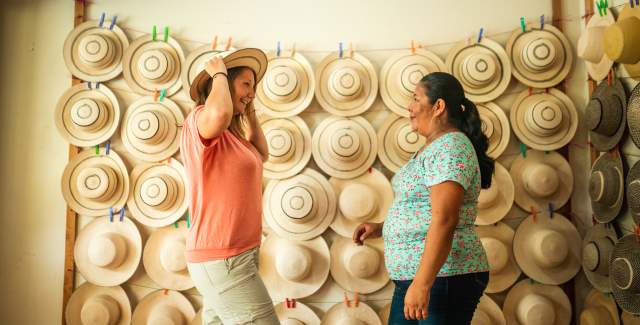
Turista usando un Sombrero Pintao tradicional de Panamá.

Pintao hat 

What is it?

If you want to take home something totally unique, be sure to get a pintao hat, part of typical Panamanian dress. The pintao hat is an iconic, signature handicraft. The raw materials used to weave the hat and the process of making the hat are so complex and traditional that UNESCO has declared them Intangible Cultural Heritage

Where to buy

If you’re visiting the province of Cocle, be sure to pass by La Pintada, the home of the artisans who plant, cut, dye, and weave the fibers to make this incredibly special hat. And in Panama City, you’ll find pintao hats in both luxury stores and handicrafts hubs. 

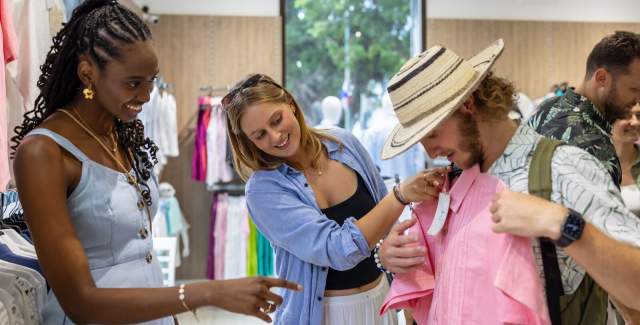
Visitantes de compras en una tienda en el Casco Antiguo en Ciudad de Panamá, Panamá

Panamanian guayaberas

What are they?

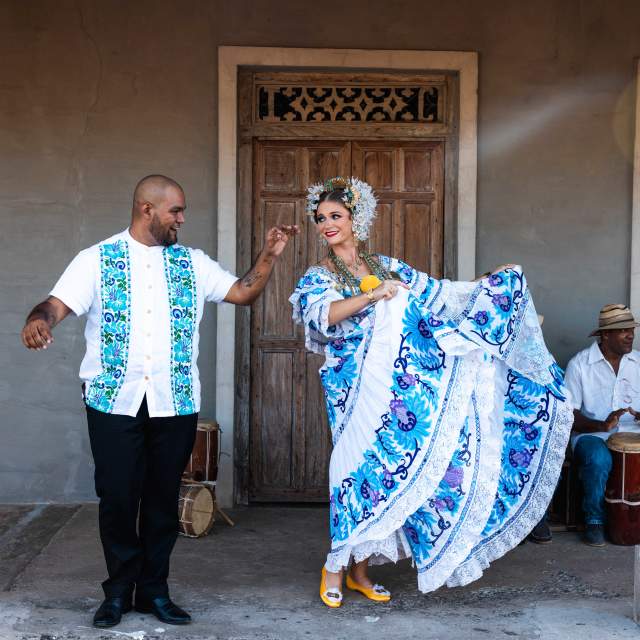
Guayaberas are the definition of tropical elegance: lightweight shirts that will always make an impression. Find guayaberas in a variety of styles. You can take home a simple, traditional, white guayabera made by hand or choose something bolder with colors or appliques that highlight the provinces and customs of the country.

Where to buy

Find guayaberas in the central provinces of Panamá: Los Santos, Herrera, Cocle, and Veraguas. Guayaberas are essential at special events, so you’ll be able to find them at local shops. In Panama City, you can buy luxury guayaberas at stores and boutiques in shopping centers and simpler models at crafts fairs. 

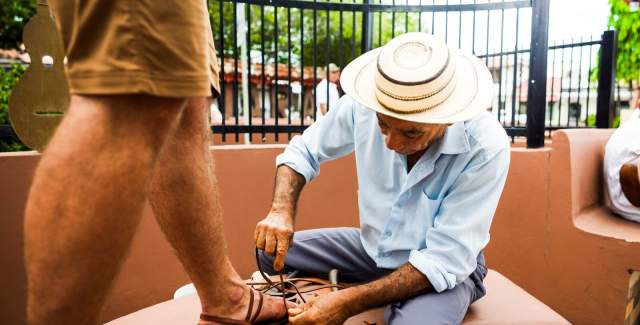
Cutarra hecha a mano en La Villa de Los Santos, provincia Los Santos, Panamá

Custom-made cutarras

What are they?

Cutarras are the traditional shoes that are worn with the typical dress of men and women in the central provinces. These bovine leather sandals are made by hand by specialists who use the same processes that have been passed down from our ancestors.  

Where to buy

Visit the province of Los Santos to meet the leatherworkers who will carefully weave your next cutarras. Today, you can find cutarras in every color, with platforms, and with different qualities of leather, although there are traditional designs and colors. Choose the one you like most that best suits your style. If you have enough time, the artisan can weave your custom-made cutarras directly on your feet during your visit. 

Turistas de compras en el Casco Antiguo en Ciudad de Panamá, Panamá

Baskets and figurines carved from cocobolo

What are they?

In the Emberá-Wounaan region, the people weave and carve unique works by hand to express their beliefs and connection with the land that surrounds them. Baskets made by the Emberá people and wood carvings made by the Wounaan are two very special pieces that you can take home with you.

Where to buy

Set off from the port of Gamboa to visit an Emberá-Wounaan community. Spend a day in the Indigenous region to learn about their traditions and dances, and to understand the importance of their art. Buy souvenirs directly in the region or visit a handicrafts hub in the city.

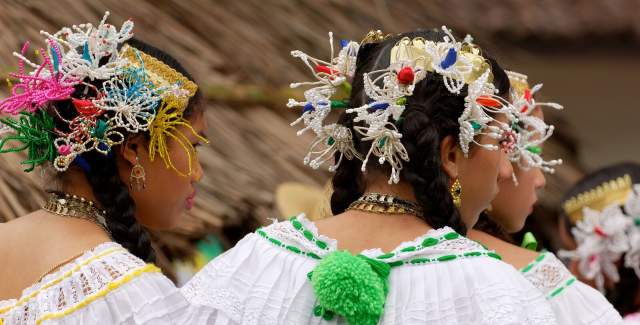
Mujeres usando trajes típicos de Panamá en Pedasi, provincia Los Santos, Panamá

Jewelry inspired by tembleques

What are they?

Tembleques are pieces of jewelry used in typical Panamanian dress. These ornaments, which are worn on the head, are complex pieces made from fish scales. Exceptional figures are handcrafted to represent wildlife, and they are an emblem of Panamanian luxury

Where to buy

Artisans in Las Tablas, in the province of Los Santos, receive fish scales, and then they wash, dry, and transform them completely by hand into the most expensive tembleques in the country. Visit the artisans in Las Tablas or the luxury jewelry shops in Panama City to find the best pieces. 

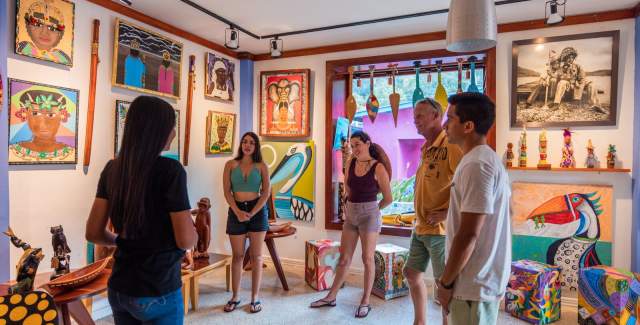
Visitantes en la galería Casa Congo en Panamá.

Congo paintings and pictures

What are they?

The Congo culture, declared Cultural Heritage of Humanity, has rich artistic traditions. The Congos dance, sing, and paint the souls of the enslaved Africans who fought for their freedom in intense colors. Congo paintings highlight the struggle of black people with vibrant colors that tell a complex, contemporary story. 

Where to buy

Visit Portobelo, in the province of Colon, just one and a half hours from Panama City. In this historic town on the Panamanian Caribbean, be sure to visit the workshops of Casa Congo. Buy paintings made by local artists or handmade drums used in celebrations and traditional dances. 

Mujer usando aretes artesanales de la comunidad Ngäbe Buglé, de Soloy, Panamá.

Beaded necklaces

What are they?

Ngäbe women use beads as accessories to complement their colorful style. Over the years, their complex designs conquered Panamanian jewelry. Bring home a necklace or earrings that show off the colors of the flowers in the mountains in the Ngäbe-Buglé region and dazzle everyone at your next event with unique jewelry. 

Where to buy

Visit the Ngäbe-Buglé region, surrounded by the forested mountains of Panamá, to learn about this beautiful culture. Follow trails that lead to enchanting waterfalls, spend the day with the community, and of course, buy signature jewelry and clothes from the Ngäbe-Buglé.

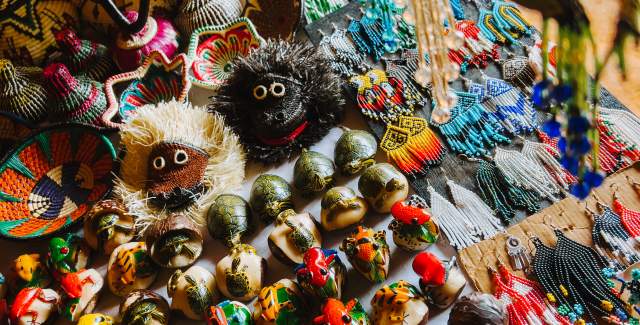
Indigenous Panamanian crafts, featuring hand-painted animal figurines, yarn dolls, colorful beaded necklaces and bracelets, and woven baskets, all arranged on a table.

Carved Tagua Handicrafts

What are they?

The Emberá-Wounaan are also expert carvers, working with branches or fallen trees of precious woods to create true works of art. They also carve tagua seeds, a frequent ornament in Panamanian homes, also known as “Panamanian vegetable ivory.”

Where to buy

To meet the Emberá along the Gatun River, you’ll need to drive for just under an hour to Puerto Corotu, which you can find on Google Maps. At this meeting point, between the provinces of Panamá and Colon, members of the community will be waiting to take you by canoe for 30 minutes.

The Emberá offer day experiences where you can see their dances, learn about medicinal plants, and get temporary tattoos with natural dyes – as well as visit a small artisan market where you can purchase carved tagua handicrafts.


Where to buy handicrafts in Panamá

If you want to take home these meaningful souvenirs, visit the craft centers to buy directly from the artisans who create these works of art.

You can find some of the craft centers at:

  • Mi Pueblito

  • Casco Antiguo

  • Handicrafts hub in Cardenas 

  • Handicrafts market in Balboa

  • Handicrafts fair in Valle de Anton

  • Handicrafts market in Cocle (Penonome)

  • Handicrafts shop in Chiriqui (David, in the MICI [Ministerio de Comercio e Industrias (Ministry of Trade and Industry)] offices)

  • Handicrafts shop in Herrera (La Arena)

  • Handicrafts shop in Veraguas (Santiago)


What about another adventure?

Folklore & Music

Get to know the rich and varied folklore of Panamá in Pedasi and Tonosi. The region of Los Santos, where these two towns are located, is considered the cradle of Panamanian folklore. Don't miss out on seeing and listing all the tasks involved in a gala skirt. Listen to the incomparable...